

2026-10-30
OEM wire harness manufacturing involves more than assembling wires and connectors. It requires manufacturers and buyers to work from clearly defined electrical, mechanical and production requirements. For global OEM projects, the process typically covers engineering review, component selection, prototype development, production planning, assembly and quality verification.
A wire harness designed for one vehicle or piece of equipment may not be suitable for another, even when the connectors and overall appearance are similar. Circuit configuration, wire specifications, terminal compatibility, routing and environmental conditions all influence the final assembly.
For buyers sourcing custom assemblies, understanding these requirements before requesting a quotation can make supplier evaluation and production coordination more straightforward.
SOAR provides automotive wire harness solutions and electronic wire harness products for different connection applications. The appropriate configuration depends on the project's drawings, specifications and intended use.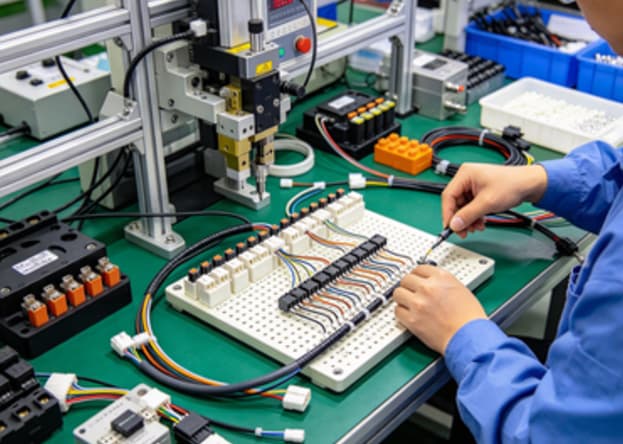
OEM wire harness manufacturing refers to producing wiring assemblies according to an original equipment manufacturer's design, technical specifications or approved project requirements.
Unlike standard off-the-shelf cables, OEM assemblies may require specific wire lengths, connector combinations, terminal types, circuit arrangements, protective materials and identification methods.
A typical OEM project may involve:
Electrical design requirements: Circuit count, pin assignments, conductor specifications, signal paths and grounding.
Connector and terminal selection: Approved part numbers, mating interfaces, locking structures and terminal compatibility.
Mechanical construction: Overall length, branch positions, routing, bending requirements and protective materials.
Production requirements: Assembly instructions, labeling, component control and production quantities.
Quality documentation: Inspection records, electrical test results and agreed acceptance criteria.
These details establish the manufacturing scope and help prevent misunderstandings between engineering, procurement and production teams.
The manufacturing workflow should be defined around the project rather than assumed to be identical for every harness. However, most OEM procurement projects can be organized into several practical stages.
The process starts with reviewing the customer's technical information.
Buyers should provide available drawings, wiring diagrams, BOMs, connector part numbers, samples and application details. The manufacturer can then review the proposed construction and identify missing information or potential manufacturing concerns.
Design for Manufacturability (DFM) review may also help identify issues involving connector availability, wire routing, assembly access, branch dimensions and component selection before production begins.
When the original design contains unresolved details, these should be documented and confirmed rather than interpreted without approval.
Once the design requirements are understood, the main components need to be identified.
Important considerations include:
Wire conductor size, insulation and temperature requirements.
Connector housings, terminals and contact specifications.
Protective sleeving, conduit and heat-shrink materials.
Sealing components and strain-relief arrangements where required.
Labels, identification marks and packaging requirements.
Material selection should reflect the actual installation environment. Automotive, industrial and electronic equipment applications may have different requirements for vibration, temperature, moisture, abrasion and chemical exposure.
For example, an automotive connection assembly may require specific connector coding and vibration-related design considerations, while an industrial harness may place greater emphasis on routing, mechanical protection and equipment interfaces.
Prototype production provides an opportunity to check whether the proposed design can be assembled and installed as intended.
At this stage, buyers should review connector compatibility, wire lengths, branch positions, pin assignments, labeling and overall dimensions.
If modifications are necessary, the revised drawing and BOM should be updated before the design moves into production.
A useful practice is to establish a formal sample approval process. The approved prototype, drawing revision and material specifications then become references for subsequent production.
After the design is approved, the manufacturing plan can be established according to the product structure and order requirements.
Typical operations may include wire cutting, stripping, terminal crimping, connector insertion, branching, protective covering, labeling and final assembly.
The specific operations depend on the harness design. Complex assemblies may require additional fixtures, process instructions or specialized tooling.
For recurring OEM orders, production planning should also consider component availability, batch quantities, material changes and delivery schedules. These factors help maintain consistency between initial orders and subsequent production batches.
Quality verification should follow the acceptance criteria agreed during the engineering and procurement stages.
Depending on the assembly, checks may include:
Visual inspection of terminals, connectors and workmanship.
Continuity testing and pin-to-pin verification.
Dimensional checks against approved drawings.
Label and identification verification.
Functional testing where required by the application.
Review of inspection records and delivery documentation.
Not every harness requires the same test program. Buyers should specify the required methods, sample quantities and acceptance standards before production rather than relying on a general statement that the product has been tested.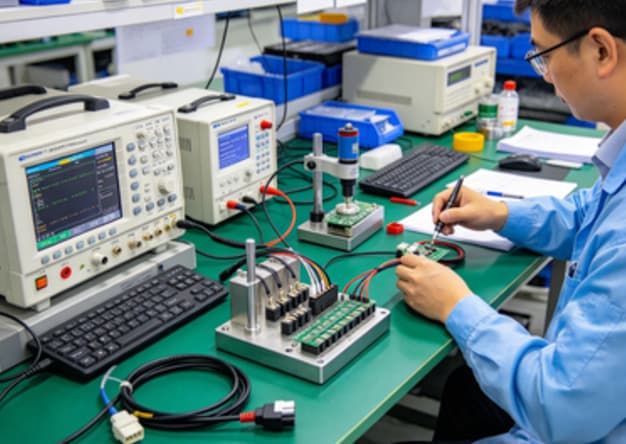
A clear RFQ helps manufacturers understand the project and prepare quotations based on comparable requirements.
The following information provides a practical starting point.
| RFQ Information | Details to Provide | Procurement Purpose |
|---|---|---|
| Application | Vehicle, machinery, electronic equipment or system | Establishes the operating context |
| Technical drawings | Wiring diagrams, CAD files and assembly drawings | Defines the intended construction |
| BOM | Wire, connectors, terminals and accessories | Identifies required components |
| Electrical requirements | Pinout, circuits, voltage and signal information | Clarifies electrical connections |
| Mechanical requirements | Length, branch dimensions, routing and protection | Defines installation requirements |
| Quantity | Prototype, initial order and estimated annual demand | Supports production and cost planning |
| Quality requirements | Inspection methods, test records and acceptance criteria | Establishes delivery expectations |
| Schedule | Sample approval date and target production delivery | Supports manufacturing coordination |
If some technical information is unavailable, buyers should identify the missing items and request engineering clarification.
A photograph or physical sample can support an initial review, but it should not replace an approved drawing and electrical definition when these are required for production.
For OEM buyers, quality is not limited to checking the finished harness before shipment. It also involves controlling the information and processes used throughout production.
Drawing revisions, component substitutions, crimping requirements, assembly instructions and inspection criteria should be managed consistently.
The NASA-STD-8739.4 cable and harness workmanship standard provides technical reference material on cable and harness workmanship. Although its application scope is specific, it can help buyers understand why defined workmanship requirements matter.
For supplier traceability considerations, buyers can also refer to the UL Solutions Wiring Harness Traceability Program.
These references provide general guidance. They do not automatically establish that a particular supplier or assembly meets a specific certification or customer requirement.
The quotation for an OEM wire harness depends on the actual design and production scope.
Several factors commonly influence the total cost:
Component specifications: Connector brands, terminal types, wire materials and specialized components can affect material costs and availability.
Assembly complexity: High circuit counts, multiple branches, complex routing and additional termination operations may require more production time.
Protection and customization: Sleeving, conduit, overmolding, sealing and customized labeling can add material or processing requirements.
Testing and documentation: Additional electrical tests, inspection records and customer-specific documentation should be included in the quotation scope.
Order quantity: Prototype quantities and recurring production orders may have different setup, procurement and production cost structures.
Buyers should compare quotations based on the same drawing revision, BOM, testing requirements and delivery scope. A lower quoted price may reflect different component assumptions or omitted inspection requirements.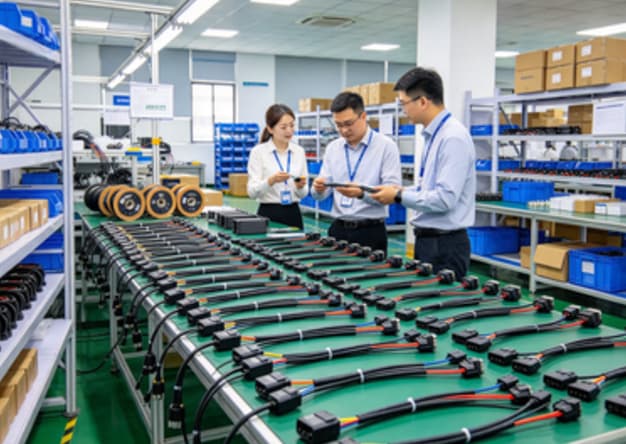
An OEM wire harness project often involves more than one purchase order. Once a product enters regular production, buyers may need to manage forecast changes, engineering revisions, replacement components and repeat deliveries.
Before establishing a long-term supply arrangement, consider the following:
Confirm who is responsible for approving engineering changes.
Establish a controlled process for drawing and BOM revisions.
Agree on how component substitutions will be reviewed.
Define inspection and documentation requirements for repeat orders.
Communicate forecast quantities and expected delivery schedules.
Keep approved samples and production specifications available for reference.
These arrangements are particularly useful when the same harness is supplied across multiple production batches or equipment models.
A manufacturer generally needs an application description, technical drawings, BOM, connector references, wiring requirements, expected quantities and quality criteria. A sample or wiring diagram can also help clarify the intended configuration.
A physical sample can serve as a reference for reviewing dimensions, connectors and construction. However, electrical pin assignments, material specifications and other critical requirements should be confirmed before production.
Standard wire harnesses generally follow predefined product configurations, while OEM manufacturing is based on the equipment manufacturer's specific design and production requirements. OEM projects may involve customized connectors, wiring layouts, dimensions, labeling and testing criteria.
Prototype approval confirms that a particular sample meets the agreed review requirements. Consistency in subsequent production also depends on controlled drawings, approved materials, manufacturing instructions, process checks and inspection criteria.
Compare quotations using the same technical drawing, BOM, component specifications, order quantities, testing requirements and delivery terms. Ask suppliers to identify exclusions, assumptions and any proposed substitutions.
A well-defined OEM wire harness project starts with clear engineering information and continues through controlled production and agreed quality checks.
For buyers evaluating custom automotive and electronic wiring assemblies, reviewing the available SOAR automotive wire harness collection and electronic wire harness collection can help identify relevant product categories.
For a project-specific discussion, prepare your drawings, BOM, estimated quantities and testing requirements so the proposed configuration can be reviewed against your application.


