

2026-10-22
In the high-stakes environment of modern industrial automation, the reliability of a system is only as strong as its weakest connection. While logic controllers and robotic actuators often receive the most attention, the cables that transport power and data act as the "nervous system" of the entire operation. For engineers, project managers, and OEM consultants, selecting the correct Industrial Cable is a critical decision that impacts machine uptime, signal integrity, and long-term maintenance costs.
Modern manufacturing facilities are no longer static environments. They are dynamic, fast-paced, and increasingly complex. The shift toward Industry 4.0 has introduced higher data rates and more sensitive electronic components, making the physical layer of connectivity—the cabling—more important than ever. This guide explores the technical nuances of industrial cable applications, focusing on the material science, mechanical requirements, and environmental factors that define performance in the automation sector.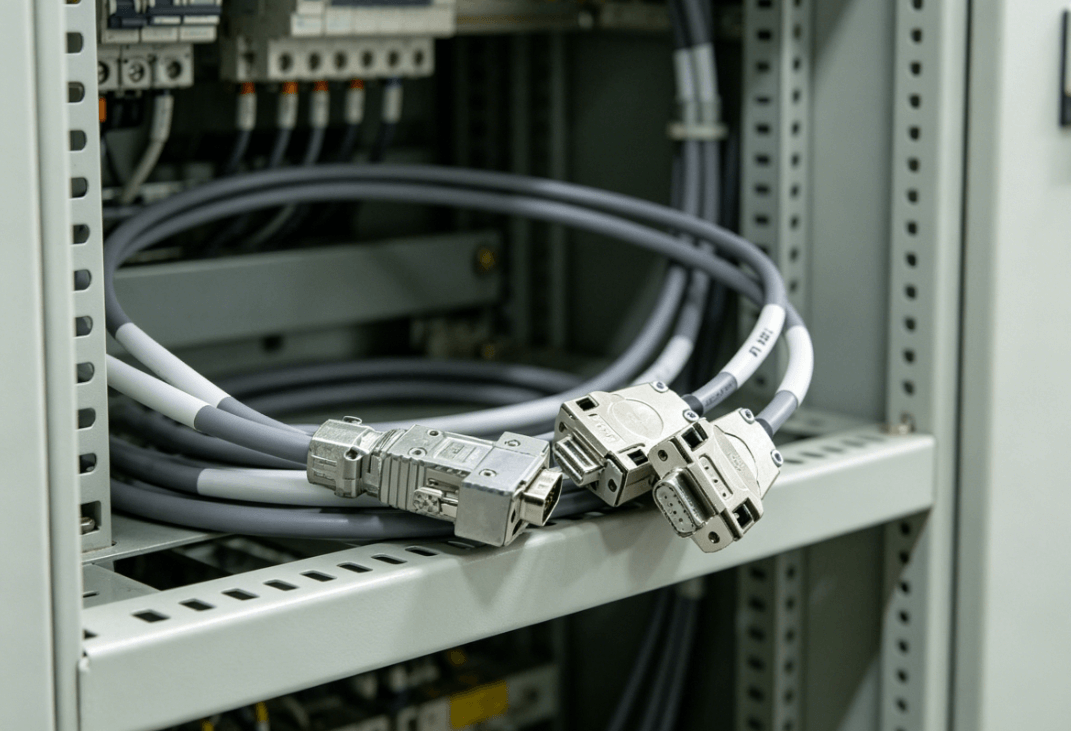
Industrial-grade cables differ fundamentally from standard commercial wiring in their ability to withstand external stressors. In a typical automation cell, a cable may be exposed to constant movement, high-voltage spikes, and chemical contaminants simultaneously. To address these challenges, the architecture of an industrial cable is built around four primary pillars: conductor construction, insulation, shielding, and jacketing.
The conductors are typically made of high-purity, oxygen-free copper. In applications involving motion, these conductors are finely stranded—sometimes using hundreds of individual hairs-breadth wires—to increase flexibility and prevent work-hardening. Insulation materials must provide high dielectric strength while remaining thin enough to keep the overall cable diameter manageable. Shielding is the next layer of defense, utilizing tinned copper braids or aluminum foils to protect against electromagnetic interference (EMI). Finally, the outer jacket serves as the primary barrier against the external environment, providing resistance to abrasion, oils, and flames.
The choice of jacketing and insulation materials is not merely a cost consideration; it is a technical necessity based on the specific chemicals and temperatures present on the factory floor.
PUR is often the material of choice for high-performance automation. It offers exceptional resistance to abrasion and tearing, which is essential for cables that are dragged across metal surfaces or housed in abrasive cable tracks. Furthermore, PUR is highly resistant to mineral oils and coolants, making it the industry standard for CNC machining centers and automotive assembly lines.
While PUR is superior for movement, PVC remains a cost-effective and reliable choice for static installations. Modern industrial-grade PVC is formulated to be flame retardant and resistant to a wide range of common industrial chemicals. However, in extreme cold, standard PVC can become brittle, which is why it is typically reserved for controlled indoor environments or fixed tray applications.
TPE combines the processing advantages of plastics with the flexibility of rubber. It is frequently used in high-flex "drag chain" applications because it maintains its mechanical properties over millions of bending cycles. TPE is also known for its excellent performance in low-temperature environments, where other materials might fail and crack.
In foundries, glass manufacturing, or high-temperature processing units, standard polymers will degrade or melt. Fluoropolymers (such as PTFE) and Silicone provide the thermal stability required to operate in environments exceeding 150°C. These materials also offer superior chemical inertness, though they are often more expensive and more difficult to process.
In automation, "movement" is a broad term that encompasses several distinct types of mechanical stress. Engineers must categorize the motion profile of their application before selecting a cable.
Static cables are installed in conduits or trays and never move after installation. Occasional movement cables might be handled during maintenance but are not part of an active machine cycle. These cables prioritize electrical ratings and flame resistance over mechanical endurance.
Also known as "drag chains," linear motion involves the cable bending in a single plane repeatedly. Continuous-flex cables designed for this purpose use a specialized "center-core" construction. This design prevents the conductors from migrating and twisting around each other—a phenomenon known as "corkscrewing"—which can lead to internal short circuits.
Six-axis robotic arms subject cables to twisting forces (torsion). A standard linear flex cable will fail rapidly under torsion because the internal braiding and shields are not designed to slide against each other during a twist. Torsion-rated cables utilize different braiding angles and internal lubricants to ensure the cable can twist up to +/- 360 degrees per meter without damage.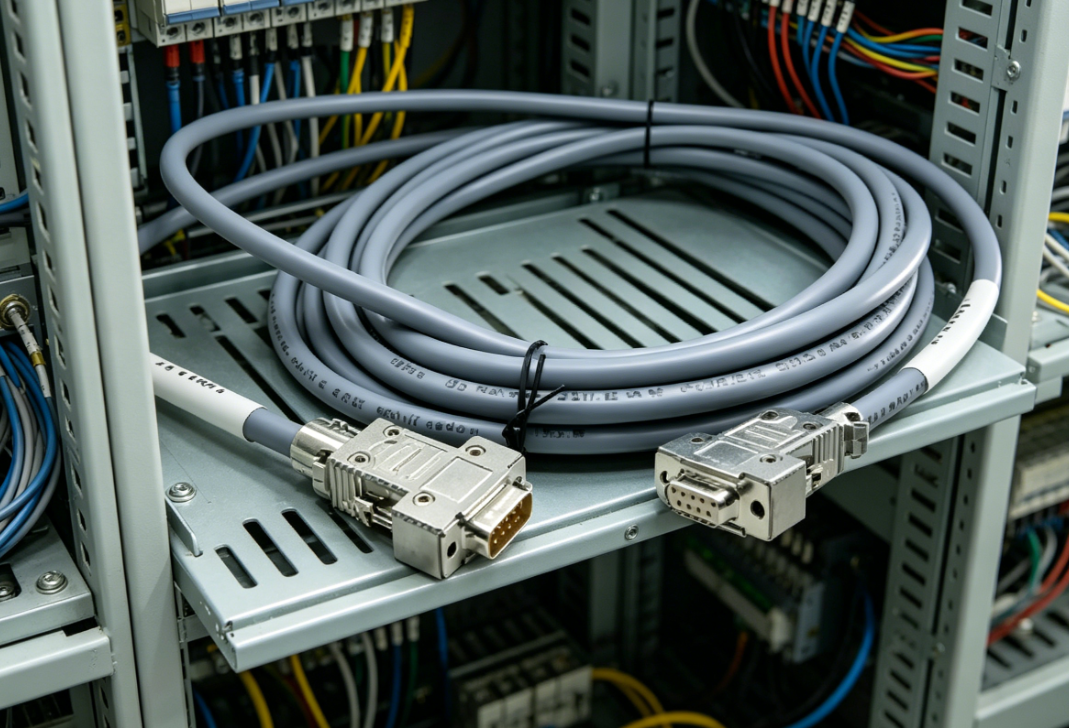
The diversity of industrial cables is best illustrated by the specialized roles they play in different parts of a modern factory.
VFDs are essential for controlling motor speeds, but they produce significant electrical noise and high-voltage spikes. VFD cables require heavy-duty shielding and specialized insulation (like cross-linked polyethylene) to prevent "reflected wave" damage and to ensure that the noise generated by the motor does not interfere with nearby control signals.
The rise of the Industrial Internet of Things (IIoT) has led to an explosion in the number of sensors on the factory floor. These typically use M8 or M12 connectivity. The cables must be small enough to route through compact machinery but rugged enough to handle the vibration and occasional coolant splashes common in automated cells.
As factories move toward real-time data monitoring, Industrial Ethernet (Cat5e, Cat6, Cat7) has become the backbone of the system. Unlike office-grade Ethernet, industrial versions feature foil and braid shielding (SF/UTP or S/FTP) and jackets that can withstand the mechanical rigors of the manufacturing environment.
To save space and reduce installation time, many OEMs are moving toward hybrid cables. These cables combine power, signal, and sometimes even fiber optics or pneumatic tubes into a single jacket. This simplifies cable management in complex robotic systems where space is at a premium.
| Application Type | Primary Stress Factor | Recommended Jacket Material | Key Performance Metric |
|---|---|---|---|
| Robotic Arm | Torsional Twist | PUR (Polyurethane) | Degree of Torsion (+/- 360°) |
| Linear Drag Chain | Continuous Flex | TPE or PUR | Bending Radius (e.g., 7.5 x d) |
| CNC Machine Tool | Oil & Coolant Ingress | PUR | Oil Resistance (UL Oil Res I/II) |
| Food Processing | High-Pressure Washdown | PVC (Food Grade) or TPE | IP69K Compatibility |
| Foundry/Heat Treatment | Thermal Stress | Silicone or PTFE | Temperature Range (-60 to +200°C) |
When integrating cables into an automation system, two technical factors often determine the success or failure of the installation: the minimum bending radius and electromagnetic interference (EMI).
The bending radius is the smallest curve a cable can safely make without compromising its electrical or mechanical integrity. For continuous-flex applications, this is usually expressed as a multiple of the outer diameter (e.g., 10x OD). If a cable track is designed with a radius tighter than the cable's specification, the outer jacket will stretch and thin, while the internal conductors will undergo excessive compression, leading to premature fatigue.
EMI, or "electrical noise," is equally critical. In an environment with large motors, welders, and high-frequency switching, low-voltage signals (like those from a 0-10V sensor) can easily be corrupted. Proper grounding of the cable shield is essential. Furthermore, separating power cables from signal cables in different trays—or using cables with superior shielding—is a fundamental requirement for maintaining data integrity in smart factories.
For manufacturers and OEMs operating globally, compliance with international standards is the primary indicator of cable quality and safety.
The next major evolution in industrial cabling is Single Pair Ethernet (SPE). Traditionally, Ethernet requires two or four pairs of wires. SPE achieves data transmission over a single pair, significantly reducing the cable’s weight and diameter. This is a game-changer for "end-of-arm" tooling on robots, where every gram of weight matters. SPE also supports Power over Data Line (PoDL), allowing a single thin cable to power and communicate with a sensor, further simplifying the architecture of modern automation systems.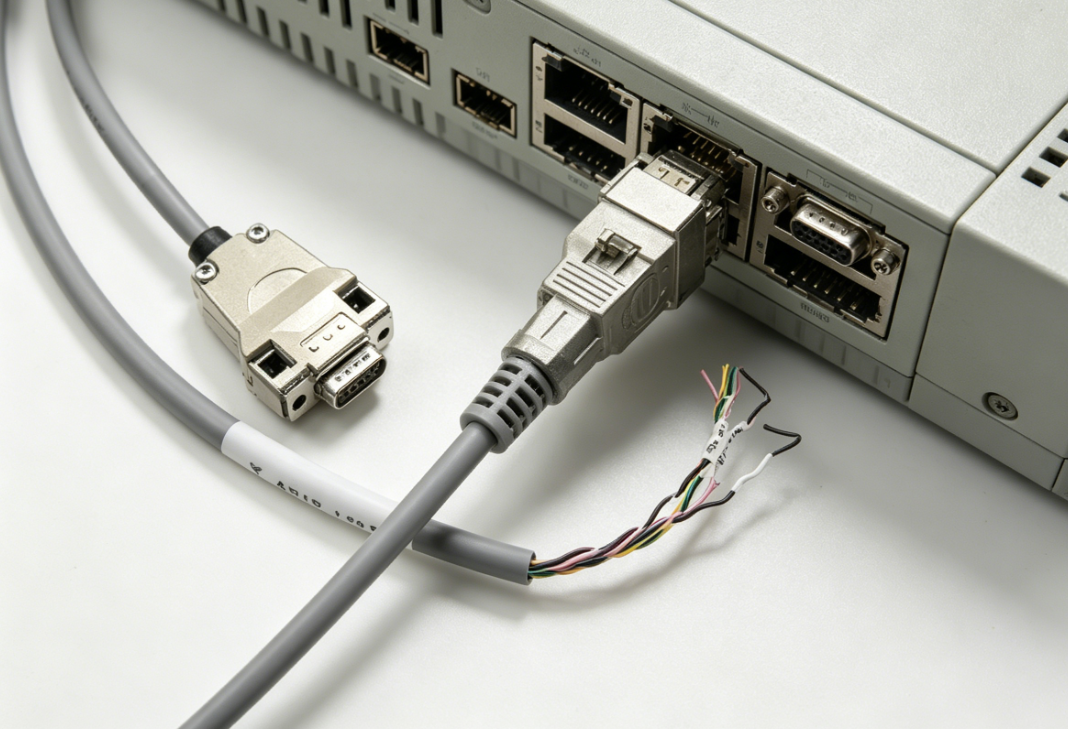
The selection of industrial cables is a strategic engineering decision that directly influences the efficiency and reliability of modern automation. By understanding the material properties of PUR, TPE, and PVC, and by correctly identifying the motion dynamics—whether linear or torsional—engineers can prevent the most common causes of system downtime. As Industry 4.0 continues to push the boundaries of speed and data density, the role of high-performance connectivity will only grow in importance, serving as the essential foundation for the smart factories of tomorrow.
If a static cable is used in a continuous-flex application, the copper conductors will quickly undergo work-hardening and snap. The outer jacket may also crack or deform because it was not designed to handle the repetitive stress of the bending radius, leading to a total system failure.
PUR is generally better for applications requiring high abrasion resistance and contact with aggressive oils or coolants. TPE is often preferred for extremely cold environments or applications requiring very high flexibility at a slightly lower cost, though it may have lower resistance to certain specific chemicals compared to PUR.
Yes. For cables intended for movement, a higher strand count (using thinner individual wires) increases flexibility and resistance to fatigue. While a solid conductor is fine for fixed wiring, it would break almost immediately in a robotic application.
Without proper grounding of the cable shield, the shield acts like an antenna, actually attracting EMI rather than blocking it. This can lead to "ghost" signals in PLCs, corrupted data packets in Ethernet lines, and erratic behavior in sensitive sensors.
While it varies by region, the DESINA standard is widely used: Green for Industrial Ethernet/Bus, Orange for Power/Servo, and Gray for Control/Signal cables. Following these standards makes troubleshooting and installation much faster for technicians.
IEEE Xplore Digital Library for Technical Cable Research


