Learn the essentials of automotive wire harnesses, their components, and their role as a vehicle's nervous system in this comprehensive engineering guide
The modern vehicle is no longer just a mechanical machine; it is a mobile supercomputer. At the heart of this transformation lies the automotive wire harness. Often described as the vehicle’s "central nervous system," this complex assembly is responsible for the seamless flow of power and data between the engine, sensors, infotainment systems, and safety components.
Without a functioning wire harness, a car is essentially a collection of inert metal and plastic. As vehicles transition toward electrification and autonomous driving, understanding the architecture of these systems becomes vital for engineers, manufacturers, and fleet managers alike.
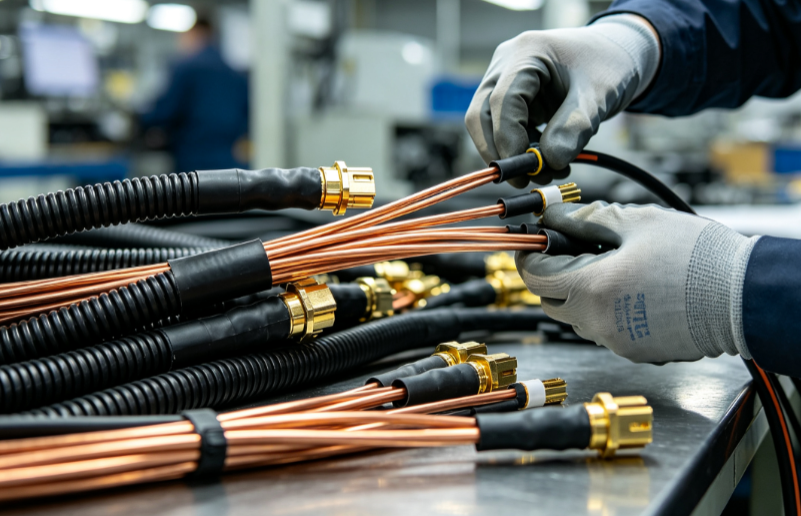
Defining the Automotive Wire Harness
An automotive wire harness is a precisely engineered assembly of cables, terminals, and connectors that transmit electrical power and signaling information throughout a vehicle. Unlike a simple loose collection of wires, a harness is bound together—usually by tape, conduit, or braided sleeves—to protect the electrical circuit from the harsh environment of an engine bay or the vehicle chassis.
By grouping wires into a single integrated unit, manufacturers can optimize space, reduce the risk of electrical shorts, and simplify the assembly process during vehicle production. This systematic organization ensures that every sensor, from the ABS brake module to the tire pressure monitor, communicates reliably with the Electronic Control Unit (ECU).
Core Components of a Wire Harness Assembly
Every wire harness is customized to the specific make and model of a vehicle, but they all share several fundamental components:
-
Conductive Wires: Typically made of copper for its high conductivity. The gauge (thickness) of the wire varies depending on the current load it must carry.
-
Connectors and Terminals: These are the "plugs" that allow the harness to interface with components. They are often gold or tin-plated to ensure corrosion-resistant contact.
-
Insulation and Jacketing: Materials like PVC, Cross-linked Polyethylene (XLPE), or Fluoropolymers protect the internal copper from heat, oil, and moisture.
-
Protection Layers: To withstand physical abrasion and vibration, harnesses are wrapped in corrugated tubing, heat-shrink tubing, or high-temperature adhesive tapes.
The Critical Role of Wire Harnesses in Vehicle Architecture
In a standard internal combustion engine (ICE) vehicle, the wire harness manages everything from the spark plugs to the taillights. However, in the context of Electric Vehicles (EVs) and Advanced Driver Assistance Systems (ADAS), the harness must handle significantly higher data speeds and voltage levels.
The harness performs three primary functions:
-
Power Distribution: Routing energy from the battery or alternator to the starter, lights, and cabin electronics.
-
Data Transmission: Moving signals from sensors to the ECU, allowing the car to make real-time decisions regarding fuel injection or emergency braking.
-
Circuit Protection: Incorporating fuses and relays into the assembly to prevent overloads from damaging sensitive electronic modules.
Engineering Challenges: Environment and Durability
Designing an automotive wire harness is an exercise in extreme durability. Engineers must account for several destructive factors that can lead to system failure:
-
Vibration and Mechanical Stress: Constant road vibration can lead to "fretting corrosion" at the connector pins. Secure locking mechanisms and strain relief are essential.
-
Thermal Management: Components near the engine manifold must withstand temperatures exceeding 150°C, while exterior harnesses must remain flexible in sub-zero climates.
-
Electromagnetic Interference (EMI): As vehicles integrate more wireless technology, harnesses require specialized shielding to prevent electrical "noise" from disrupting critical safety signals.
Interaction with Diagnostic Systems and Rugged Hardware
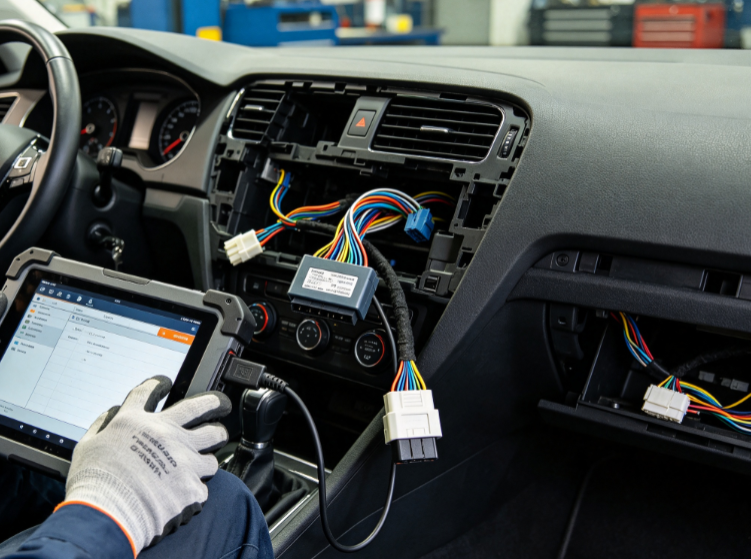
In the manufacturing and maintenance phases, the wire harness is the primary point of interface for diagnostic tools. Field engineers and technicians rely on high-performance hardware to monitor signal integrity and troubleshoot connectivity issues.
For instance, when performing end-of-line (EOL) testing on a factory floor or conducting field diagnostics in harsh environments, professional-grade tools are required. These scenarios often necessitate the use of rugged tablets, which provide the durability to withstand drops and spills while offering the processing power to run complex automotive diagnostic software. These devices interface directly with the vehicle's OBD-II port or the harness itself to verify that every circuit is operating within designated tolerances.
Manufacturing Standards and Compliance
Because the wire harness is safety-critical, its production is governed by rigorous international standards. Quality assurance isn't just a preference; it's a regulatory requirement. Key standards include:
-
ISO 26262: This standard addresses functional safety in road vehicles, ensuring that the harness design minimizes risks from electrical malfunctions.
-
IPC/WHMA-A-620: The primary industry standard for cable and wire harness assembly, defining the acceptability criteria for crimps, mechanically secured connections, and soldering.
-
SAE J1128: A standard specifically focusing on low-voltage primary cable performance in automotive applications.
The Future: From Wiring to "Zonal Architecture"
The automotive industry is currently shifting from "Signal-based" wiring to "Zonal Architecture." In traditional setups, every single component had a dedicated wire running back to a central ECU, leading to heavy and bulky harnesses that could weigh over 50kg.
In modern zonal designs, local "gateway" modules collect data from nearby sensors and send it through a high-speed Ethernet backbone. This reduces the total length of the wire harness, lowers vehicle weight, and improves fuel efficiency—a critical factor for the range of modern electric vehicles.
FAQ
Q: What is the difference between a wire harness and a cable assembly?
A: While the terms are often used interchangeably, a wire harness is typically a more complex system that groups multiple breakout branches and various types of wires into one sheath. A cable assembly is generally a single cable with two ends, used for a specific point-to-point connection.
Q: Why are wire harnesses so expensive to manufacture?
A: Despite automation, a significant portion of automotive wire harness assembly is still done by hand. The high degree of customization and the precision required for crimping and routing makes it a labor-intensive process that demands high quality control.
Q: Can an automotive wire harness be repaired?
A: In some cases, individual connectors or damaged wires can be spliced or replaced. However, for safety-critical systems like airbags or high-voltage EV battery lines, manufacturers usually recommend a complete harness replacement to ensure the integrity of the circuit.
Q: What materials are used for high-voltage EV harnesses?
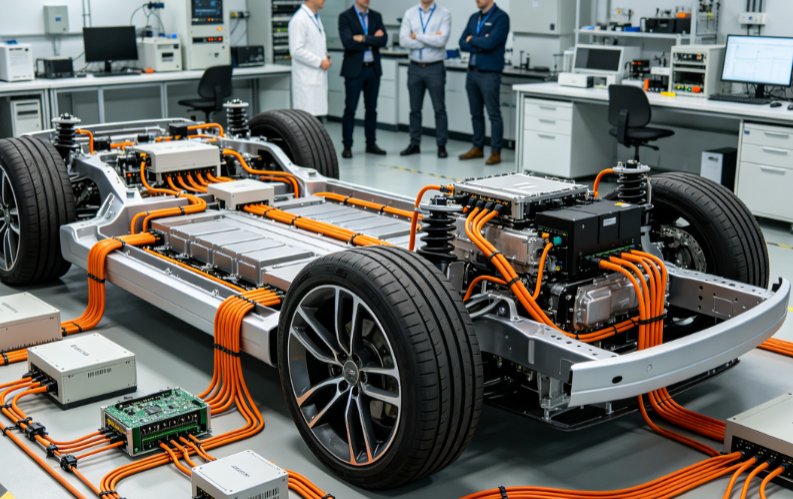
A: High-voltage harnesses are usually distinguished by their bright orange color. They utilize thick-gauge copper or aluminum conductors and specialized insulation materials like Silicone or XLPE to handle voltages up to 800V or higher.


