

2026-10-22
In the rapidly evolving landscape of 2026 industrial automation and electric vehicle technology, the demand for precision-engineered interconnect solutions has reached an all-time high. Custom cable assemblies and wiring harnesses serve as the vital infrastructure for power distribution and high-speed data transmission across complex systems. Whether it is an aerospace control module or a consumer electronic device, the integrity of these components dictates the overall reliability of the final product.
The decision to move from "off-the-shelf" solutions to custom-engineered harnesses is usually driven by specific environmental constraints, electrical requirements, or space limitations. This guide examines the technical nuances of these systems, providing engineers and procurement specialists with the insights needed to navigate the complexities of modern manufacturing and assembly.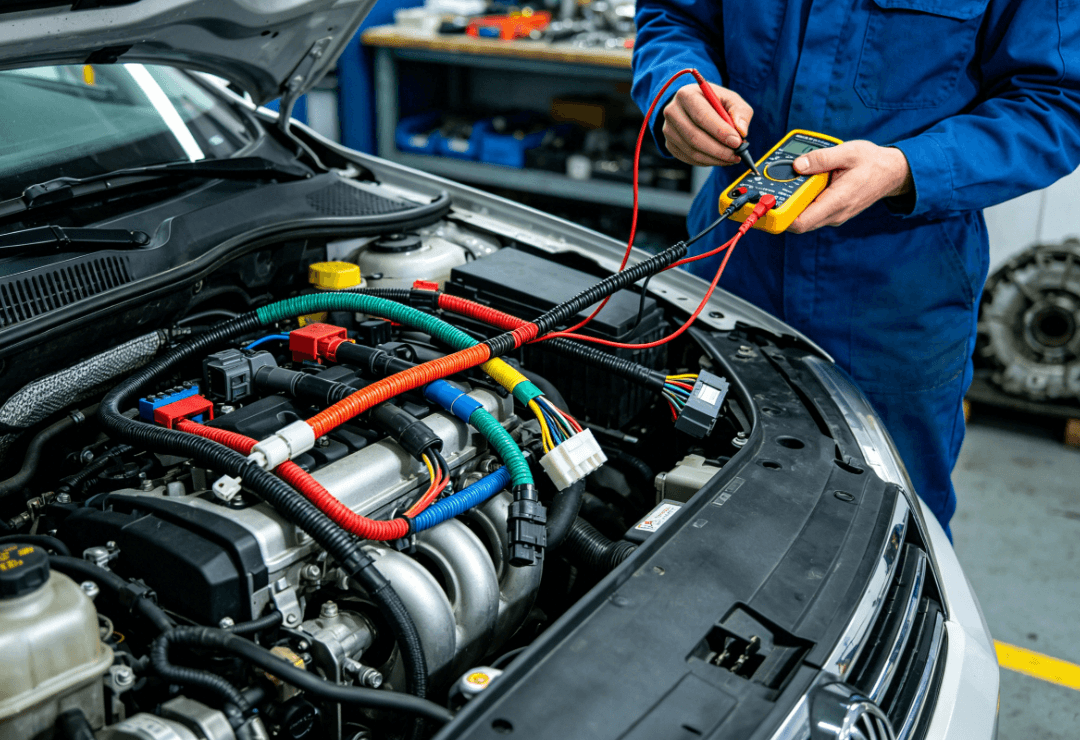
While these terms are frequently used interchangeably, they represent two distinct levels of protection and complexity. Understanding this distinction is the first step in successful system design.
A cable assembly is characterized by its robust outer protection. It typically consists of a group of wires encased in a single, continuous exterior sheath made of materials like heat-shrink tubing, vinyl, or thermoplastic rubber. This design is engineered to protect the inner conductors from environmental factors such as moisture, abrasion, chemical exposure, and extreme temperature fluctuations. In many 2026 industrial applications, cable assemblies are the preferred choice for external cabling where the unit is exposed to physical wear.
A wiring harness, or a wire loom, is an organizational system rather than a protective one. It bundles individual wires (which may already have their own thin insulation) into a single unit using cable ties, friction tape, or expandable sleeving. The primary purpose of a harness is to optimize space and simplify the installation process in complex environments. Unlike a cable assembly, a harness often features multiple "breakouts" or branches that allow the wires to lead to various components. This is the standard configuration for internal vehicle circuitry and control panels.
The performance of any custom assembly is fundamentally limited by the materials selected during the design phase. Engineering teams must evaluate conductors, insulation, and connectors as a holistic system.
The conductor is the primary path for electrical current. In 2026, while high-purity copper remains the standard, many specialized applications utilize tinned copper to prevent oxidation or silver-plated copper for high-frequency signal integrity. The American Wire Gauge (AWG) selection is a critical calculation; it must balance current-carrying capacity (ampacity) with weight and flexibility. For instance, in modern EV applications, reducing wire gauge without compromising safety is essential for maximizing vehicle range.
Insulation materials are chosen based on the operating environment. Common 2026 standards include PVC for general-purpose use, Polyurethane (PUR) for high-flex robotic applications, and Fluorinated Ethylene Propylene (FEP) for extreme heat resistance. For those working within the automotive sector, automotive wire harnesses frequently utilize cross-linked polyethylene (XLPE) because of its superior resistance to fluids and high engine-bay temperatures.
The termination point is where most electrical failures occur. Custom assemblies rely on precision crimping or soldering to attach terminals to the conductor. In high-vibration environments, engineers specify locking connectors or sealed housings (such as Deutsch or Amphenol series) to ensure that the connection remains gas-tight and resistant to mechanical stress over the product's lifespan.
Manufacturing a custom harness is a blend of automated precision and skilled manual labor. Adherence to standards like IPC-WHMA-A-620 ensures that every unit meets 2026 quality benchmarks.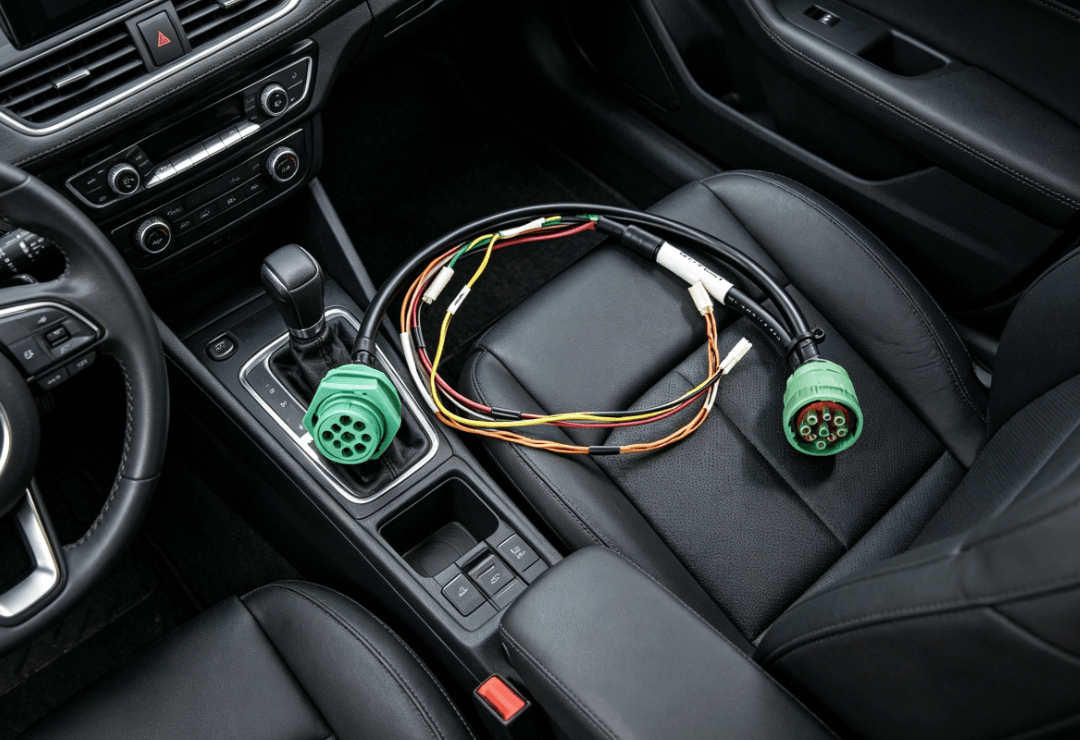
Every harness begins as a 2D schematic that is translated into a 1:1 scale layout on a formboard. This board dictates the exact length of every wire and the precise location of every breakout and connector. This phase is crucial for ensuring that the harness will fit perfectly into the final assembly without being too tight (causing strain) or too loose (causing interference).
Modern facilities use high-speed "cut-strip-terminate" machines. These systems ensure that every wire is cut to an exact length and that the insulation is stripped without nicking the conductor strands. Automated crimping presses then apply the terminals with monitored force, ensuring that the mechanical bond meets specific pull-force requirements.
Post-assembly, every harness must undergo a series of rigorous tests. Continuity testing ensures that the pinout matches the schematic. Insulation resistance testing (often called Hi-Pot testing) ensures there are no leaks or shorts that could cause failure under high-voltage conditions. In 2026, many manufacturers have integrated digital testing benches that provide a serialized report for every harness produced.
The automotive industry is perhaps the most demanding sector for custom wiring solutions. Vehicles in 2026 require a "nervous system" that can handle high-voltage power for propulsion and high-speed data for autonomous driving.
Automotive diagnostic cables are specialized assemblies designed to interface between the vehicle's internal computer systems and diagnostic hardware. These cables must withstand frequent plugging and unplugging, exposure to oils, and the mechanical strain of a workshop environment. They often incorporate specialized shielding to prevent EMI from distorting the data being pulled from the vehicle's ECU.
The whole car wire harness is the most complex component in a vehicle's electrical system. It integrates thousands of feet of wire, connecting everything from the taillights to the advanced driver-assistance systems (ADAS). Modern designs focus on "zonal architecture," where smaller, localized harnesses communicate via high-speed data trunks to reduce total vehicle weight and manufacturing complexity.
To guarantee that a custom assembly will survive its intended lifecycle, engineers must design for the "worst-case scenario" regarding environmental and mechanical stress.
| Environmental Factor | Technical Challenge | Engineering Solution |
|---|---|---|
| Mechanical Vibration | Metal fatigue at the crimp joint | Use of stranded wire and strain relief boots |
| Fluid Exposure | Corrosion of terminals and shorts | IP67/IP68 sealed connectors and adhesive-lined heat shrink |
| Thermal Cycling | Insulation cracking or melting | Selection of XLPE or Silicone-rated materials |
| EMI/RFI Interference | Data corruption or signal loss | Braided copper shielding or foil wrapping |
| Space Restrictions | Kinking and internal wire stress | Right-angle backshells and high-flex conductors |
Designing and manufacturing custom cable assemblies and wiring harnesses in 2026 is an exercise in precision engineering. From the initial selection of AWG sizes to the implementation of zonal architecture in automotive systems, every decision impacts the reliability and performance of the end product. By understanding the structural differences between assemblies and harnesses, selecting the appropriate materials for the environment, and adhering to international manufacturing standards, organizations can ensure their interconnect systems are prepared for the rigors of modern technology.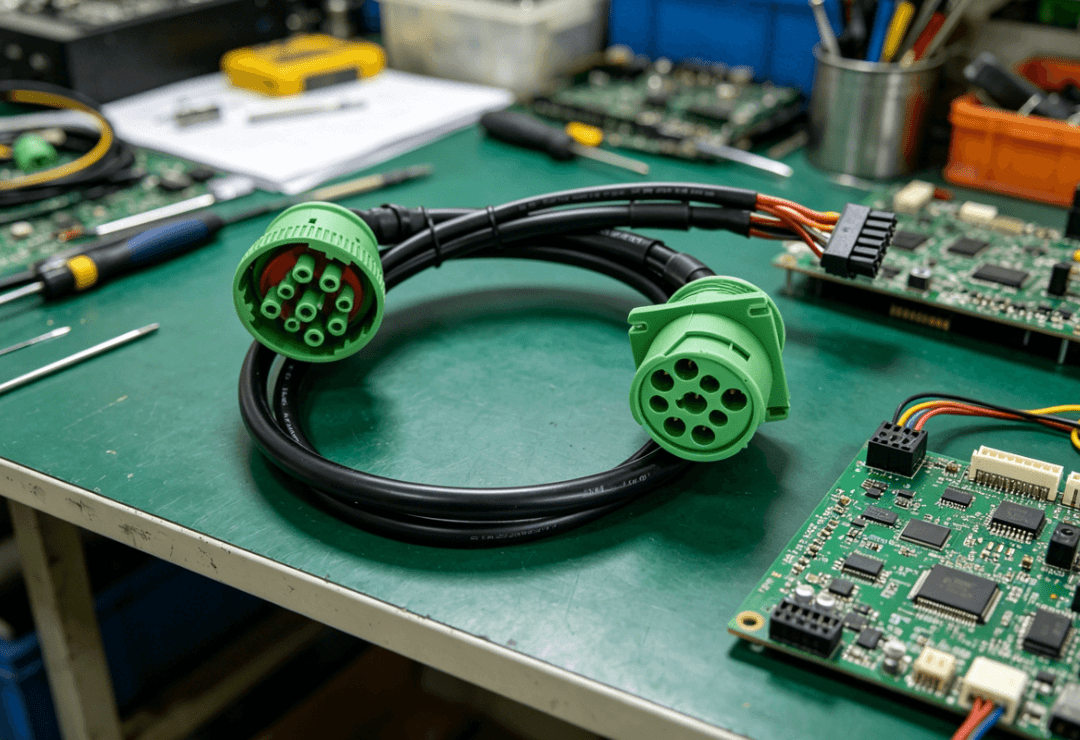
Custom harnesses are engineered for the specific footprint and electrical load of your device. This eliminates excess cable length, reduces weight, and ensures that the connectors and insulation are perfectly suited for the environment, which is rarely the case with generic off-the-shelf cables.
Electromagnetic Interference (EMI) can disrupt signal integrity, especially in data-sensitive applications like medical devices or automotive sensors. To mitigate this, custom assemblies incorporate shielding, such as aluminum foil or tinned copper braiding, which acts as a Faraday cage to protect the internal signals.
The IPC-WHMA-A-620 standard provides a consensus-based framework for the requirements and acceptance of cable and wire harness assemblies. Following this standard ensures that every crimp, solder joint, and bundle meets a verified level of mechanical and electrical integrity, which is essential for 2026 compliance.
For outdoor applications, materials like Polyurethane (PUR) or specialized PVC with UV stabilizers are recommended. These materials resist degradation from sunlight and remain flexible in freezing temperatures, preventing the jacketing from cracking and exposing the conductors.
A thinner wire (higher AWG) has higher resistance, which generates more heat when current flows through it. If a harness is bundled tightly, this heat can build up and melt the insulation. Engineers must calculate the "derating factor" to ensure that the bundle can safely dissipate heat in 2026 high-power applications.


